South Asia’s heatwave and ongoing energy crisis

The heatwave that's recently swept South Asia again exposes a deeper structural challenge facing developing economies: how to provide reliable and affordable energy under intensifying climate stress.
Share

Across India, Pakistan and Bangladesh, temperatures have crossed 45°C in several regions. Scientists now estimate that climate change has made such extreme heat events in South Asia at least three times more likely.
As temperatures rise, electricity demand surges simultaneously across households, businesses, industries and agriculture.
The heatwave is revealing how climate vulnerability, energy insecurity and geopolitical volatility are becoming interconnected across South Asia.
The spiral of climate change and energy demand
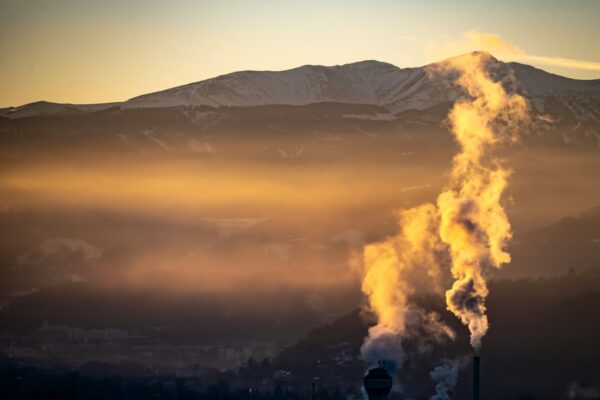
The link between climate change and electricity demand in South Asia has become cyclical. Higher temperatures increase cooling demand, which raises electricity generation needs. In most South Asian countries, that additional electricity still comes largely from fossil fuels with steady increase in fossil based power generation, which, in turn, further contribute to emissions, worsening future heatwaves. For example in increased air-cooling demand accounted for about 30% of India’s year-on-year electricity-demand growth from April to June in 2024.
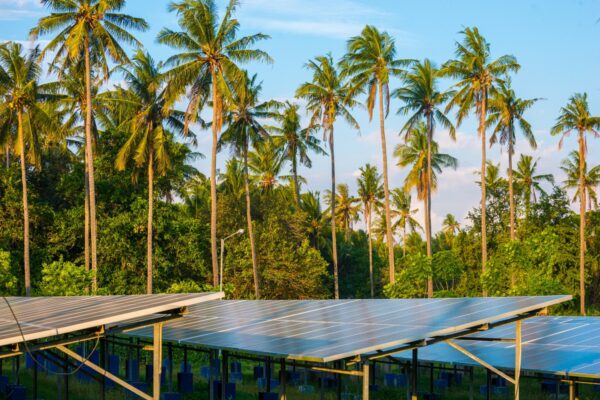
There is only one way to break the chain – switching to renewable energy.
India remains heavily dependent on domestic coal, which accounts for over 70% of electricity generation despite rapid renewable expansion. During the heatwave, the government increased coal fired generation to avoid supply shortfalls.
Pakistan and Bangladesh face a different but equally difficult challenge: both governments remain highly exposed to the volatility of imported fossil fuel markets, for oil and gas. When heatwaves increase electricity demand, fuel import costs surge alongside blackout risks. Both of these countries previously faced similar challenge in 2022-23, during Russian invasion on Ukraine.
However, Sri Lanka, Nepal and Bhutan, whose electricity systems are built on hydropower, have demonstrated a more resilient model.
Blackouts are becoming a systemic problem
In India, several states experienced localised outages despite adequate national generation capacity, as the challenge shifts from generation shortages to transmission, distribution and grid flexibility constraints.
Bangladesh’s situation has been acute. During the April 2026 heatwave, it faced a 16% shortfall in electricity generation. Fuel supply disruptions compounded the crisis, with rural Bangladesh experiencing up to 10 hours of power cuts daily.
In Pakistan's Karachi, where temperatures crossed 44°C, the government simultaneously managed electricity and water shortages, intensifying public health risks.
The blackout problem in South Asia highlights the mismatch of the speed of renewable energy expansion and infrastructure readiness. On 23 May 2026, renewables met 33% of India's peak supply and daytime shortages fell to zero. But when the sun sets, solar generation drops to near zero while cooling demand stays high. Pakistan faces the same pattern, rooftop solar has expanded rapidly, but without storage the grid cannot hold that energy into the evening.
In extreme heat conditions, electricity access becomes directly linked to health, labour productivity and survival. Heat exposure without cooling disproportionately affects low-income populations, outdoor workers and informal settlements.
These blackouts are becoming a question of equity.
The policy contradiction: fighting heatwaves with more fossil fuels
One of the clearest contradictions emerging from the current crisis is the continued dependence on fossil fuels to address climate-driven electricity demand.
Renewables account for only around 4–5% of Bangladesh’s power capacity. While Sri Lanka continues to rely heavily on imported fossil fuels despite ambitious renewable targets of 70%. This leaves both countries vulnerable to fuel price shocks and electricity shortages during heatwaves.
While countries like India and Pakistan have rapidly expanded renewable energy, are still behind on grid and infrastructure readiness. India reached 260 GW of renewable capacity in 2025, yet recent heatwaves exposed major transmission and distribution bottlenecks, with localised blackouts occurred alongside renewable energy curtailment and associated loss due to lack of transmission capacity.
Pakistan’s rapid rooftop solar growth has similarly outpaced grid modernisation, while financial instability and transmission losses continue to undermine supply reliability.
Yet across the region, policy responses remain increasingly economically and strategically myopic. Rather than accelerating cheap renewable energy integration, storage and grid upgrades, governments are increasingly reverting to fossil fuels expansion in the name of “energy security.” One example is the recent Indian government decision to allocate USD 4 billion for coal gasification projects, revival of Pakistan’s Gwadar imported coal-fired power project worth USD 444 million.
Climate Analytics’ 1.5°C national pathway analysis shows that India alone needs to invest USD 70 billion annually in wind and solar between 2026 and 2030 to be Paris Agreement-aligned. While in 2024 alone the government has approved 15GW of new coal capacity, with total capital cost of USD 13 billion,
Why energy transition matters for South Asia
Climate Analytics’ research shows that limiting warming to 1.5°C could nearly halve potentially lethal heat stress exposure in Bangladesh, India and Pakistan by 2050 compared with a 2°C scenario, from 774 million to 423 million person-day exposures. South Asia’s recurring heatwaves in every summer therefore underline the central reality that climate action is not separate from development, but fundamental to protecting livelihoods and economic resilience.
Our 1.5°C national pathways for India, Bangladesh and Pakistan show that a rapid, managed transition away from fossil fuels, particularly the imported one, backed by renewable energy, storage, transmission investment and energy efficiency offers the most credible route to climate stability.
Without rapid electrification and fossil fuel phase-out from the energy system, it is not possible to reach 1.5°C by end of the century. The solution is not simply replacing fossil fuels overnight, but building resilient electricity systems that delivers affordable and reliable power to all.
A key misconception in energy debates is that developing countries should prioritise socio-economic development over climate action. South Asia’s current heatwave shows that they are deeply interconnected policy priorities. A 1.5°C-compatible transition offers South Asian countries an opportunity not only to reduce emissions, but to build cleaner, safer and more secure energy systems that better protect people from the escalating impacts of extreme heat.