Climate leadership from the frontlines: lessons from Bangladesh, Bhutan and Nepal


Abhishek Yadav, Zuneera Shah, Tenzin Wangmo, Mariam Saleh Khan, Manjeet Dhakal
As Bangladesh, Bhutan, and Nepal graduate from Least Developed Country (LDC) status, their shared climate leadership and regional resilience efforts highlight the need for stronger global support for these countries’ climate ambitions.
Share
Bangladesh, Bhutan, and Nepal have always demonstrated sustained climate leadership despite acute vulnerability to climate impacts and constrained resources. The three countries are at a pivotal moment as they graduate from the United Nations’ Least Developed Countries (LDC) category. Founded in 1971, the category was designed to acknowledge that specific countries faced severe structural, historical, and geographical disadvantages, requiring special international support measures.
The role of the three countries in global climate diplomacy has been particularly visible through the LDC Group on Climate Change within the UNFCCC process, which each of them has led in the past. Through this group, each country has helped shape the collective demands of vulnerable countries for deep and sustained emissions reductions aligned with limiting warming to 1.5°C under the Paris Agreement, alongside stronger commitments on climate finance and support, particularly for adaptation and loss and damage.
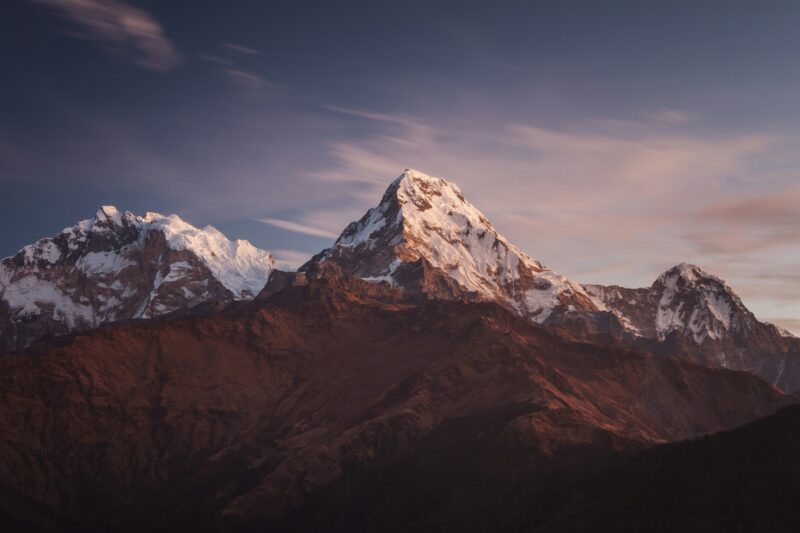
The three are also connected through a regional ecological corridor where upstream impacts, such as glacial melt and changing hydrology in Nepal and Bhutan, can cascade into downstream impacts, with Bangladesh bearing the brunt from flooding and sea-level rise. For these nations, the difference between the 1.5°C limit and higher levels of warming will decide whether climate risks can remain manageable or escalate into systemic disruptions beyond adaptation limits. Extreme and humid heat events are already becoming more frequent – particularly in Bangladesh where high humidity magnifies the impacts of heat stress – with similar heat-health risks merging in lowland and valley regions of Nepal and Bhutan. Global warming of 2°C instead of 1.5°C could lead to 30-50% more glacial volume lost by 2100 across the entire region. Nepal’s deadly glacial lake outburst floods in 2024 are just the beginning.
Recognising this interconnected reality, these three countries advanced a “mountain-to-sea” framing at COP30, reinforcing how their experiences and responses complement each other.
Ambitious climate plans
Despite these vulnerabilities, and low contribution to global greenhouse gas emission, the three countries have consistently demonstrated climate ambition. Each of the three countries has submitted progressively ambitious Nationally Determined Contributions (NDCs) in line with the provisions of the Paris Agreement and have taken steps towards aligning them to 1.5°C target. Although LDCs are granted reporting flexibilities given their capacity constraints, these countries have consistently produced detailed and ambitious plans that often go beyond minimum requirements. Yet these national plans seldom receive due attention compared to those of major emitters.
In their third NDCs (NDC 3.0) – submitted in 2025 with targets up to 2035 – these countries have expanded sectoral coverage, provided clearer quantification of targets, and focused on scaling up and increase access to renewables. All three have incorporated important guidance from the outcome of the first Global Stocktake (GST-1) into their NDC 3.0, including a focus on renewables (including hydropower), energy efficiency and loss minimisation, as well as other important targets such as green hydrogen, cattle feed and manure management, forest management, and cleaner industries. All three have also added information on just transition, and addressing loss and damage.
Despite their limited capacities, all three countries have shown the initiative by pledging unconditional emissions reduction targets, which they intend to fulfil from their own domestic resources. These unconditional targets can be the foundation to leverage implementation of conditional targets, which are more ambitious but are contingent on further international climate finance and support.
Financing Bangladesh, Bhutan and Nepal’s climate plans
Despite their ambitions, these countries cannot implement these plans on their own. The majority of their NDC targets tend to be conditional, which means they rely on international support for implementation. The total cost of implementing Bangladesh’s emissions reductions in their third NDC from 2025 to 2035 is estimated at USD 116 billion, with Bhutan’s costed at USD 14 billion, and Nepal’s USD 74 billion. Similarly, the cost for implementing adaptation priorities in the NDC 3.0 is estimated at USD 14 billion (2023-2038) for Bhutan, USD 20 billion (2026-2035) for Nepal, with Bangladesh's annual adaptation investment requirement reaching USD 12–14 billion by 2035.
Although all three countries aim to increase domestic financing, most of the required finance is expected to come from international climate finance and support. However, international support so far has been lacking. In 2021 the entire South Asia region only received USD 6 billion of the pledged USD 11.7 billion in climate-related development finance, the majority of which was pledged in other countries. That same year, the three countries collectively received only USD 286 million of the USD 1.46 billion committed. Of this, 96% was loaned and only 3% was offered in the form of grants. Both the pledged and disbursed amounts were insufficient for the three countries to meet their conditional NDC targets and adaptation priorities in 2021.
As NDCs help guide countries future development pathways, all three countries now need to incorporate their unconditional NDC targets into national planning and budgeting process, while mobilising resources for conditional targets. In the coming years, developing project pipelines and financing strategies will be important to create an enabling environment for implementing NDC targets in collaboration with funders as well as the private sector.
Planning resilience for the long term
Taken together, their NDCs also reflect strong adaptation-forward framing which complement the long-term planning laid out in their National Adaptation Plans (NAPs) representing a strategic shift from project-based interventions to long-term, systemic resilience.
For the three countries, the NAP is not just a policy document, but a survival roadmap and implementation strategy. It identifies medium and long-term adaptation needs and priorities, and strategises how to address them. This is critical for all three countries as their economies and livelihoods are dependent on climate-sensitive sectors such as agriculture, hydropower, fisheries and forestry. Reducing climate risk and vulnerability – and building climate resilient infrastructure across sectors that protect their communities, economy and ecosystems –is essential for sustainable development and preventing marginalised groups from being left behind – such as smallholder farmers or fishers.
Moving forward
Following recognition of their progress across key socioeconomic indicators, the graduations of Bangladesh, Bhutan, and Nepal from Least Developed Country status marks an important development milestone. While graduation from LDC status reflects development progress, there are repercussions. Exiting reduces access to dedicated financial and technical assistance support earmarked for this group, raising new challenges for sustaining climate ambition in these three countries.
Recognising this context, Bangladesh and Nepal have taken steps to defer their graduation for an additional three years, until 2029, while Bhutan has already graduated and is currently undergoing its transition phase. It is essential that their graduations do not lead to vulnerability traps in which hard-earned development gains are eroded by escalating climate impacts. Without sustained and adequate support to implement their carefully-designed national climate plans, these countries risk having their recent progress reversed and falling into debt traps.
Development partners will need to significantly increase grant-based and highly concessional climate finance to help these countries realise their ambitious NDC targets, build resilience and increase adaptive capacities. At the collective level, their continued cooperation can also help amplify the voice of similarly vulnerable countries, strengthening their role as a unified regional bloc for advancing a low-carbon and climate-resilient future.