The detrimental cost of fossil fuel dependence in the Caribbean

Kory Hall
Stabilising the Caribbean's energy supply by harnessing its wind, solar, geothermal and wave resources is key to stabilising its economies.
Share
“Oil prices rise sharply after Iran launches attacks on tankers near strait of Hormuz” - The Guardian, 8 July 2026.
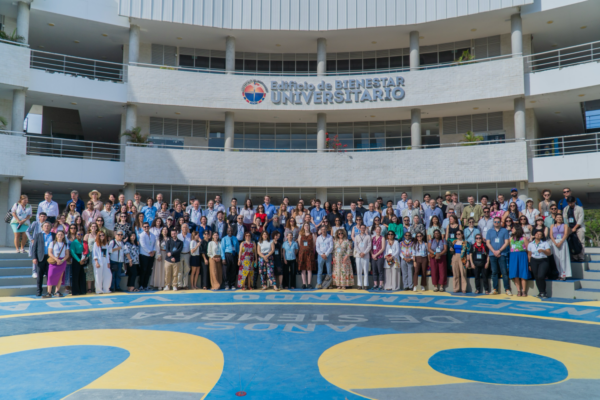
At the recent 51st CARICOM Heads of Government Conference in July 2026, regional energy stabilisation through the expanded use of renewable energy was a focal topic. Outgoing Conference Chair, the Honourable Dr. Terrance Drew, Prime Minister of Saint Kitts and Nevis, called for the urgent acceleration of renewable energy, noting that stabilising the region’s energy supply by harnessing its wind, solar, geothermal and wave resources is key to stabilising its economies.
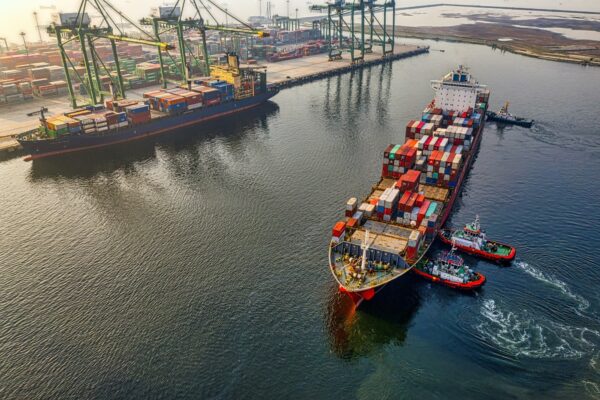
In this increasingly interconnected world, international actions are sending more intense shock waves rippling to the shores of vulnerable small island developing states. Thousands of miles away from the Caribbean, Russia’s 2022 invasion of Ukraine sent oil prices skyrocketing to US$120 per barrel, its highest level in years. This led to a surge in fuel and food prices. Caribbean countries are highly dependent on imported food and fuel, thus the regional inflation which followed was inevitable. The ongoing Strait of Hormuz tensions demonstrate the ongoing risks to our resilience. We are in an energy crisis, and SIDS are in an especially precarious position.
Closer to home, the climate change hits keep on coming, each time harder and with less time to recover from the previous. In 2024, Hurricane Beryl made history as the strongest and earliest forming storm to hit the Atlantic Ocean, wreaking havoc on the Caribbean region and causing US$ $995 million in damages in Jamaica alone. Just one year later, the region endured the catastrophic landfall of category 5 Hurricane Melissa, the strongest storm to ever hit Jamaica. Supercharged by extraordinarily warmer ocean temperatures (1.4°C warmer than average), the storm intensified at an alarming pace. The World Bank estimated that damage to the country totalled US$ 8.8 billion, equivalent to 41% of Jamaica’s 2024 GDP. It is clear that strengthening resilience as much as possible to safeguard the region’s citizenry must be a vital regional priority.
As a region, we aren’t responsible for these crises, yet our families pay the price for decisions made by others in grand offices, in metropolitan cities, in other parts of the globe. Each unit of energy that is imported, in whatever form it may take, carries a price that is not only monetary but also an alarming rise in the uncertainties of daily life.
Imagine a food vendor working to make a living on her island. When a war breaks out halfway across the world, global oil markets are disrupted, and her life is thrown into chaos. Her island relies heavily on imported diesel for electricity, so she must now grapple with higher electricity bills, more money at the gas pump to transport her goods and thus increased operational costs. From her small business to the largest groceries, staff may have to be cut and prices must rise. Peter pays for Paul, and Paul pays for all.
So the following must be asked: “Are we happy continuing this cycle?” and “Why are we still dependent on energy from others when we live in one of the most naturally blessed regions in the world?”
The recently released Climate Analytics Caribbean Global Stocktake Pathways Report outlines how the Caribbean can take deliberate steps to reduce greenhouse gas emissions in line with the Paris Agreement. However, at its core, it asks the more poignant question: “What would it take for the region to rely less on forces beyond its control and assert its developmental destiny?”.
Findings show that the Caribbean does indeed have significant renewable energy potential via its solar, wind, and geothermal resources, yet in 2022 only about 12% of electricity was generated by renewables was generated across the region. The report highlights that to achieve cleaner energy systems, committed investment, practical decision-making, the expansion of renewable energy generation, grid modernisation, efficiency and storage must be explored collectively to realise an optimal outcome. It also requires uniting and aligning towards a shared goal of energy independence and advocating for strengthened regional cooperation.
And important lessons can be learned and shared. Islands such as Saint Lucia, St. Kitts and Nevis, and Belize are demonstrating impressive approaches to their renewable energy transition, with ambitious targets and coherent frameworks for investment and development.
In a Caribbean future where governments, communities and businesses all contribute to generating electricity; the return to stability after a weather event is quicker, changing demand does not affect whether the lights stay on, and the average Caribbean national no longer needs to choose between keeping lights on or putting food on the table.
The genesis of the Pathways report may have evolved from the climate change fight, yet in exploring the avenues to an energy transition, the threat of global economic and political instability has reframed the conversation, giving it a new sense of urgency.
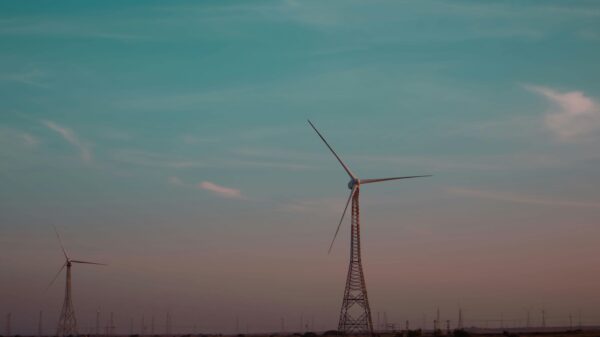
This is not a message of doom and gloom, but one of opportunity. The opportunity for the Caribbean to cultivate resources that resist the chaos of global instabilities and instead foster resilience and independence. A solution lies in our nature as tropical isles, with abundant sunshine and wind-endowed coastlines. The abundance of light and wind we receive every day are delivered to us direct to the consumer - in other words, to us -, unrestricted by global conflicts and blocked shipping lanes. Together with the heat beneath our feet, they offer us real, achievable avenues to ease ourselves away from the burden of reliance. There should no longer be any questions of whether the technologies work, but rather whether we are moving quickly enough to capitalise on all the benefits they offer.
Fundamentally, the energy transition in the Caribbean is possible and achievable pathways lie before us. Our region must harness the tools to limit our vulnerability to crises we did not cause.