COP31: Designing a Just Transition Mechanism that works for Least Developed Countries


by Zuneera Shah and Manjeet Dhakal
Just transition discussions have largely been shaped by the experiences of industrialised economies, where the challenge is to phase out fossil fuels, decarbonise established industries and support affected workers and communities. For most LDCs, the challenge is different.
Share
At COP31, governments have an opportunity to turn their commitment to equitable just transitions into practical support for countries facing some of the greatest barriers to implementation. The test at COP31 is whether the foundations for a mechanism can be secured that supports the transitions LDCs need, rather than one built primarily around the experiences and priorities of wealthier economies.
An effective just transition also depends on stronger global climate action. LDCs are already losing development gains to intensifying climate impacts, and the risks to their economies and livelihoods will grow as warming continues. Stronger emissions reductions this decade are essential to limiting the height and duration of overshoot and putting the world on a path back to well below 1.5°C by 2100.
Established at COP28, the UAE Just Transition Work Programme (JTWP) aims to advance equitable and inclusive transition pathways that support sustainable development and poverty eradication, in line with the goals of the Paris Agreement. Building on these discussions, governments at COP30 in Belém agreed to develop a Just Transition Mechanism to strengthen international cooperation, technical assistance, capacity-building and knowledge-sharing with its detailed functions and governance arrangements still to be determined.
Different starting points for a just transition
Just transition discussions have largely been shaped by the experiences of industrialised economies, where the challenge is to phase out fossil fuels, decarbonise established industries and support affected workers and communities.
For most LDCs, the challenge is different. Limited energy access, low levels of industrialisation and inadequate infrastructure mean that countries must expand essential services and economic opportunities while avoiding carbon-intensive development. High debt burdens, limited public finances and increasingly severe climate impacts make this task even harder.
Energy deficits remain substantial. In 2024, electricity access stood at 60.4% in LDCs, compared with 90.3% across low- and middle-income countries. Recent data shows that 17 of the 20 countries with the largest electricity access deficits were LDCs.
Their energy systems also differ significantly from those of industrialised economies. Traditional biomass remains a major source of household energy in many LDCs, particularly for cooking and heating, reflecting limited access to modern, clean energy alternatives.
For LDCs, a just transition must therefore support the expansion of affordable, reliable and clean energy alongside economic development, poverty reduction and climate resilience.
An opportunity to build cleaner energy systems
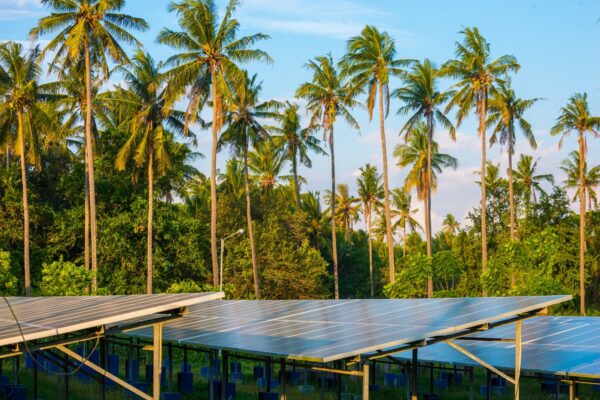
LDCs have the unique opportunity to leapfrog energy systems to renewable technologies, avoiding the carbon-intensive pathways that industrialised economies are now tasked to replace. But realising this potential requires substantial investment. Despite significant renewable energy potential, LDCs continue to lag behind other vulnerable country groups. In 2024, installed renewable electricity-generating capacity stood at just 43 watts per person in LDCs, compared with 114 watts in landlocked developing countries and 125 watts in Small Island Developing States.
This gap reflects the scale of investment required to meet growing energy demand while pursuing low-emission development. Without timely access to finance, technology and technical expertise, LDCs risk missing opportunities to build cleaner energy systems and becoming locked into infrastructure that may prove costly to replace in the future.
Financing the transition without deepening debt
The gap between LDCs' energy needs and available finance remains substantial. Despite facing some of the world's highest levels of energy poverty, LDCs received just 15% of international public financial flows for clean energy to developing countries in 2024 — USD 3.7 billion. This represented an 11% decline from 2023. Around two-thirds of these flows were provided through debt-based instruments.
This reliance on loans is particularly problematic for countries already facing severe debt pressures. Since 2010, LDCs' debt service burden has nearly quadrupled, rising at a faster rate than in other developing country groups. In 2024, LDCs spent 22.3% of government revenue on servicing debt, reducing the resources available for essential services, energy infrastructure and climate action.
For countries with limited fiscal space, debt-financed transitions risk creating further economic vulnerabilities. Governments face difficult trade-offs between meeting immediate development needs and making the long-term investments required for low-carbon, climate-resilient economies.
Increasing access to finance is therefore only part of the challenge. The terms of that finance also matter. Grant-based and highly concessional finance, alongside measures that create fiscal space, will be essential if LDCs are to invest in clean energy and climate resilience without deepening debt vulnerabilities.
The Just Transition Mechanism should help countries overcome barriers to accessing appropriate finance, including by strengthening coordination with existing climate finance institutions and development partners.
Protecting livelihoods and creating decent jobs
For many LDCs, a major employment challenge is the vulnerability of existing livelihoods to climate change, alongside the need to create millions of new jobs.
Agriculture remains the largest source of employment across LDCs, leaving substantial portions of the workforce exposed to rising temperatures, droughts and other climate impacts. Informal employment is also widespread, with many workers lacking access to social protections.
Climate impacts are already threatening agricultural productivity and rural livelihoods, adding to the challenge of economic diversification and employment creation.
At the same time, LDC labour markets are expected to receive 13.2 million new entrants annually until 2050. Creating decent employment opportunities at this scale will require investment in skills, productive capacity, emerging industries and economic diversification.
The green transition offers opportunities to create employment in renewable energy, infrastructure and other emerging sectors. But these opportunities will not necessarily reach vulnerable workers without deliberate policies to support skills development, access to decent work and social protection.
An LDC-responsive just transition must therefore extend beyond the energy sector, supporting climate-resilient livelihoods, economic diversification and opportunities for informal workers. It must also recognise that climate adaptation and resilience are central to protecting jobs and livelihoods, particularly in sectors already experiencing the impacts of climate change.
An LDC-responsive Just Transition Mechanism
The COP30 decision already recognises several of these challenges, including energy poverty, limited institutional capacity, high debt burdens and the need for grant-based and highly concessional finance. COP31 can take forward these principles when deliberating the development and eventual delivery of the mechanism.
For LDCs, a responsive mechanism is one that can expand clean energy access, create decent jobs, strengthen climate resilience and improve access to finance without worsening debt pressures. Its effectiveness will depend on whether it can address these interconnected challenges in ways that reflect LDCs' own development priorities., including through:
- Supporting country-driven transition pathways
- Improving access to appropriate finance
- Delivering practical technical assistance and capacity-building
- Ensuring inclusive governance and participation
Together, these priorities would help ensure that the mechanism addresses the interconnected challenges facing LDCs, complementing existing support arrangements.
As governments prepare to operationalise the Just Transition Mechanism (JTM) at COP31 in Antalya, they have an opportunity to ensure it responds to these different starting points and recognise the distinct development priorities, financial constraints and climate vulnerabilities of the 44 LDCs as they pursue their low-carbon, climate-resilient economies.