Never let an energy crisis go to waste: government responses to the US-Israel war on Iran
The current energy crisis triggered by the US–Israel war on Iran has once again placed energy security at the centre of geopolitical tensions. It marks the third major shock to the global energy system since 2020, highlighting the inherent vulnerabilities of fossil fuel-based energy systems.
The way governments respond to energy crises determines whether these shocks delay the transition or accelerate structural change in the energy system. Past crises—the COVID‑19 pandemic and the Russia‑Ukraine war—saw governments provide simultaneous support for renewables and fossil fuels, which stabilised emissions but failed to deliver structural progress.
Government reaction has been mixed. While many increasingly recognise that reliance on fossil fuels poses persistent risks to energy security and economic development, appropriate action is still lacking.
Clean energy technologies have matured, electrification is accelerating, and renewables are scaling at exponential rates, while fossil fuel expansion is expensive, insecure and constrained.
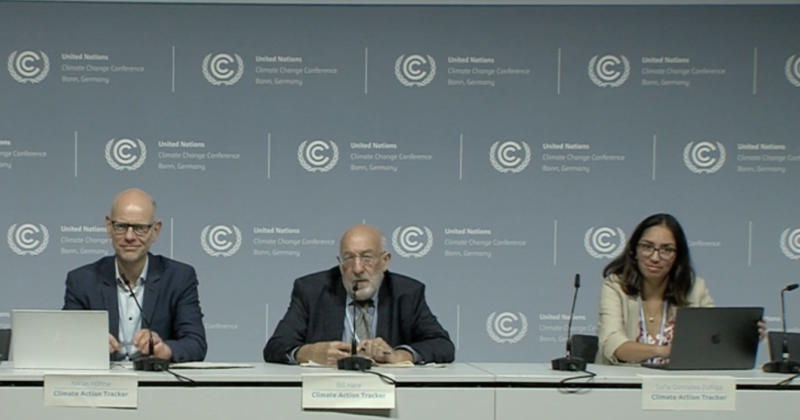
In this briefing, The Climate Action Tracker first looks at what responses work toward an energy transition and a decarbonisation of the global economy and then analyse which of the 40 countries we cover in the Climate Action Tracker have taken steps toward this, and who has not.
Governments now face a narrowing window of choice: either entrench fossil fuel lock‑ins through short‑term relief and supply expansion, or decisively tip the system toward a cleaner, more resilient equilibrium. In this context, the Transitioning Away from Fossil Fuels (TAFF) process and the associated transition roadmaps become critical governance instruments, as they can help align immediate crisis responses with longer-term decarbonisation.