Why Maritime Decarbonisation is the Caribbean’s Next Climate Battleground
UWI-CSL
Caribbean Shipping Lanes (UWI-CSL) is a regional initiative dedicated to strengthening the Caribbean's voice in global shipping and climate policy.
Explore how this project aims to help our region navigate the transition to low and zero emission shipping.
Share

The global maritime sector is undergoing an environmental overhaul that is driven by an urgent
mandate to eliminate its carbon footprint. For the Caribbean, this is an existential reality and not
merely an abstract policy discussion happening on distant shores. As Small Island Developing
States, the Caribbean’s relationship with the sea is two-fold as it is on the front lines of climate
change, yet completely reliant on marine transport to sustain daily life.
Maritime shipping serves as the heartbeat of Caribbean economies, delivering between 80%
and 90% of all imported food consumed in the region, while sharing its waters with a tourism
sector that commands roughly 43% of global cruise traffic. Decarbonizing this sector therefore,
is a high-stakes balancing act. If done poorly, new international regulations could drive up
freight costs and severely threaten regional food security. If executed equitably, however, it
offers a generational opportunity for the Caribbean to transition away from imported fossil fuels
and catalyze a resilient green economy.
The global framework for this transformation was solidified when the International Maritime
Organization (IMO) adopted its historic 2023 GHG Strategy. This milestone agreement set
highly ambitious targets, aiming to slash greenhouse gas emissions and reach a net-zero
trajectory for international shipping by or around 2050. However, the true test of this strategy
lies in the ongoing negotiation and adoption of subsequent short and mid-term measures.
These technical regulations and economic mechanisms, such as global fuel standards and
maritime carbon pricing systems, will dictate the immediate financial realities of global trade. For
vulnerable island economies like ours, participating in the design of these near-term measures
is vital. Without a strong and unified regional voice, these impending emission penalties could
unfairly penalize the region’s import-dependent nations before they have the infrastructure to
adapt.
Historically, the Caribbean faced a severe capacity deficit at this specialized intersection of
climate science, maritime law, and economic policy. This gap became increasingly visible during
the Marine Environment Protection Committee (MEPC) 80 negotiations where key
decarbonization frameworks were finalized, and seeing only four out of sixteen Caribbean IMO
member states represented.
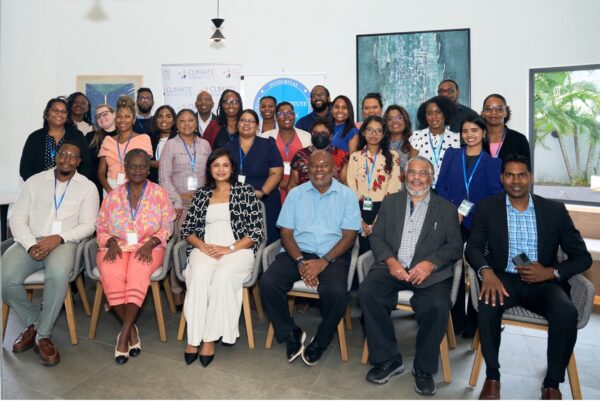
To reverse this trend and secure a fair transition, regional stakeholders mobilized, culminating in
the August 2024 launch of the University of the West Indies Caribbean Shipping Lanes Project
(UWI-CSL). Housed at the Shridath Ramphal Centre (SRC), UWI-CSL was designed to address
these deficiencies.
By focusing on technical advisory work, delegate training, and regional coordination, UWI-CSL
has quickly built up the Caribbean’s diplomatic muscle, especially at the IMO. The project has
already facilitated national consultations across several countries and successfully delivered the
first-ever joint Caribbean submission to the IMO. Through the evidence-based support of UWI-
CSL, regional leaders are no longer passive bystanders , as they are now actively shaping
global maritime policy to ensure the green transition is both impactful and equitable for the
Caribbean.
Submitted by the UWI-Caribbean Shipping Lanes Project (UWI-CSL)