After COP30, German-Caribbean Climate Talks Spotlight Urgent Need for Ambition and Adaptation
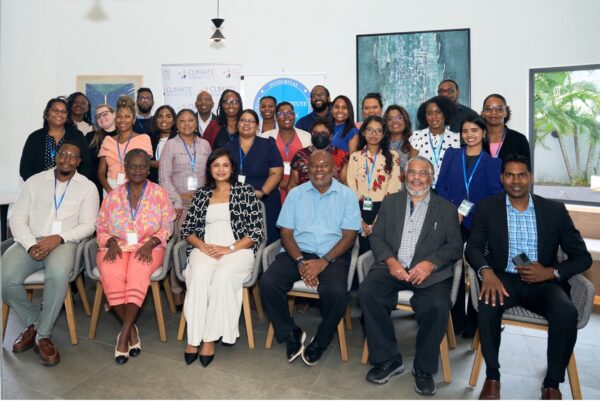
Regional and international climate leaders convened in Grenada for the third edition of the German-Caribbean Climate Talks on December 4th, focusing on increasing climate ambition and accelerating adaptation efforts following the crucial United Nations climate change summit, COP30. The high-level dialogue, held at the Radisson Hotel in Grand Anse, gathered ambassadors, technical specialists, youth advocates, and civil society leaders to assess key outcomes from COP30 and strengthen pathways for Caribbean resilience. The event held particular significance, as Grenada continues to recover from the devastating effects of Hurricane Beryl in 2024.
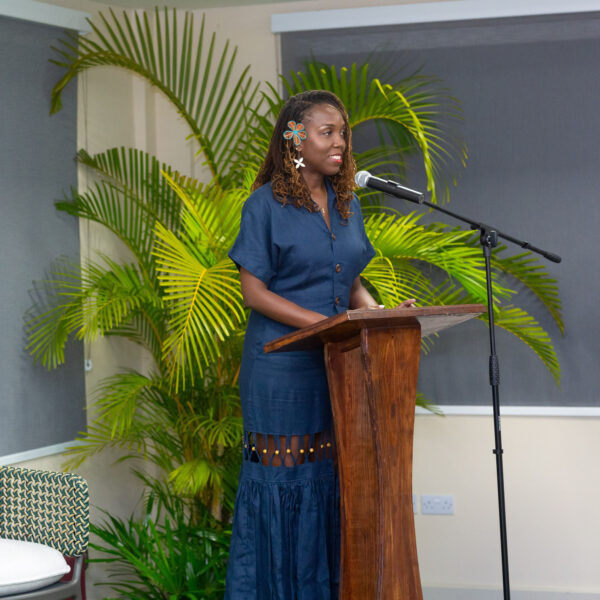
The event was hosted by His Excellency Dr. Christophe Eick, Ambassador of the Federal Republic of Germany and Special Envoy for Climate Issues in the Caribbean. Ambassador Eick emphasized the leadership of small island developing states in global climate negotiations.
“Small island developing states bring an unmatched moral authority to the global climate effort,” noted Ambassador Eick. “Germany is deeply committed to supporting the Caribbean as it builds resilience, transitions to clean energy, and prepares for the impacts already unfolding.”
Ambassador Eick highlighted Germany’s more than EUR 30 million in new cooperation agreements with CARICOM, and reaffirmed Germany’s leadership in adaptation financing.
“We are proud to be the largest contributor to the Adaptation Fund, and we will continue strengthening our partnership with Grenada and the region,” Ambassador Eick stated. “But the world must move faster – particularly the largest emitters – if we are to keep the 1.5°C global warming limit within reach.”
UNFCCC Executive Secretary, Mr. Simon Stiell participated virtually, reflecting on both the progress and persistent gaps in the multilateral process.
“At COP30, 194 nations proved that cooperation is still possible,” Mr. Stiell said. “But ambition without support will falter. We must move further and faster, especially as our region rebuilds from devastating hurricanes like Beryl and Melissa.”
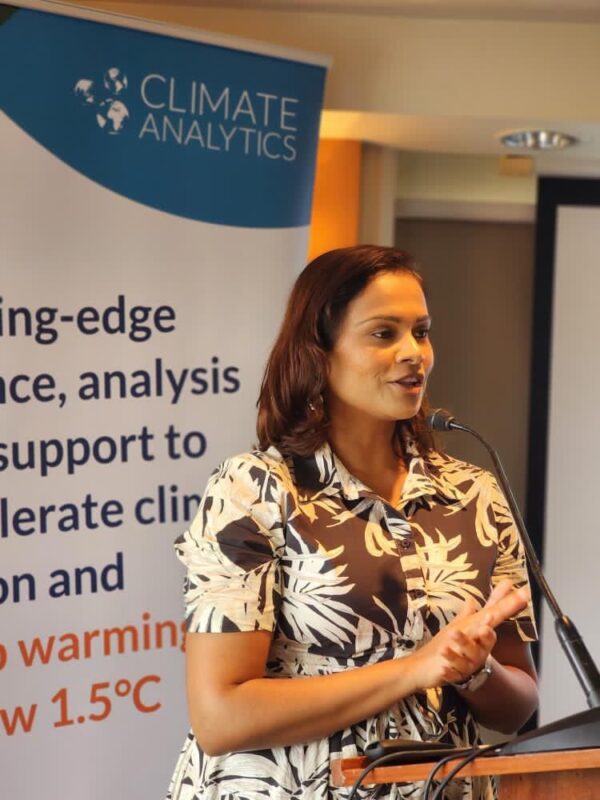
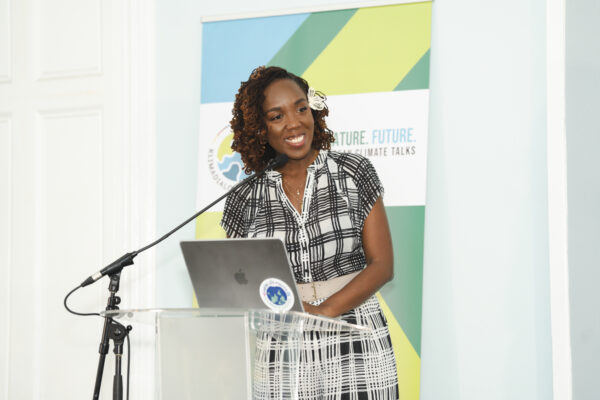
Ms. Rueanna Haynes, Director of Climate Analytics Caribbean, delivered an expert analysis of COP30’s outcomes.
“COP30 delivered important steps, but the gap between what science demands and what the world is doing remains far too wide,” Ms. Haynes remarked. “Tripling adaptation finance by 2035, mandating the development of a mechanism to operationalise the Just Transition Work Programme, and launching the Global Implementation Accelerator are significant achievements, but implementation must now move at a pace we have never seen before.”
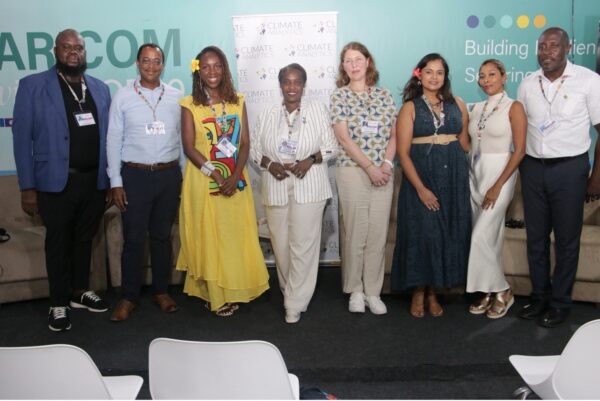
During the panel discussion, Ambassador Safiya Sawney, Special Envoy and Ambassador for Climate of Grenada; Senior Ocean, Biodiversity, and Climate Policy Specialist for SIDS, emphasized strengthening CARICOM’s collective leverage.
“Our strength as a region lies in speaking with one voice. We must pool expertise, harmonize approaches, and treat CARICOM as an investment bloc if we want to shape global decisions that affect our survival.”
Ambassador Dr. Spencer Thomas, Grenada's Ambassador and Special Envoy for Multilateral Environmental Agreements; Lead Negotiator for Climate Change and Biodiversity, highlighted that the largest barrier remains climate finance.
“The policies exist. What we need now is a consistent, predictable framework for finance to flow. COP30 gave us elements of that structure, but the world must deliver on its commitments.”
Ms. Abigail Ellis, Grenada’s National Coordinator, Caribbean Youth Environment Network (CYEN), stressed the importance of meaningful youth involvement.
“Young people are ready, able, and eager to lead. But we need access, investment, and opportunities. Climate action must build economies that work for the next generation, not leave them to pick up the pieces.”
Audience members had their say, reinforcing the urgency of policy implementation, tools to hold large emitters accountable, and potential regional strategies for climate litigation.
The dialogue reaffirmed that while COP30 marked progress, significantly greater action from the global community is required.
“We have the knowledge, we have the evidence, and we have the partnerships,” Ms. Haynes stated. “What we need now is the courage to act at the scale and speed this moment demands.”
Regional and international climate leaders convened in Grenada for the third edition of the German-Caribbean Climate Talks on December 4th, focusing on increasing climate ambition and accelerating adaptation efforts following the crucial United Nations climate change summit, COP30.
Share