Active
Mobilising climate finance in Africa
Contacts
West Africa capacity building: Benjamin Komna Djabare
Burkina Faso training manual:
Uganda climate finance guidelines: Cocou Amegnaglo
START LDC university leadership: Mahugnon Serge Djohy
Funder
Partners
START, LDC Universities Consortium on Climate Change (LUCCC)
Share

Access to finance is a crucial determining factor for whether Least Developed Countries (LDCs) are able to respond to climate change. It determines whether they can implement the adaptation and mitigation actions in their climate plans – and whether they can cope with loss and damage linked to the adverse effects of climate change.
Most of the work we do in this area aims to strengthen the capacities of countries to achieve scaled up and effective climate change mitigation and adaptation goals. We do this by fostering sustained in-country technical services for project development and climate finance access, co-developing guidelines with countries, and creating an enabling environment for climate finance access.
Technical capacity building for officials in West Africa
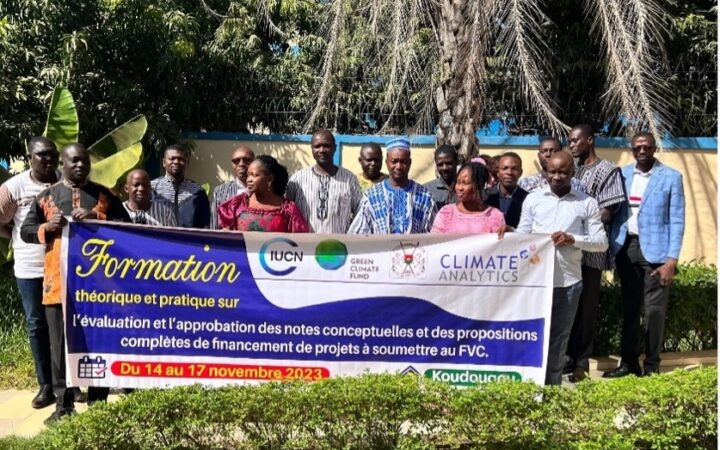
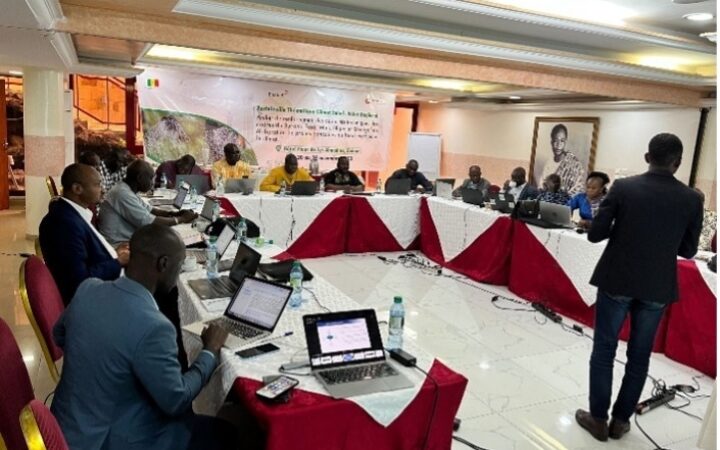
We provide technical support to Burkina Faso, Mali, Niger and Senegal in their efforts to mobilise funds for climate action. In practise this means running capacity-building workshop for officials on the development of bankable projects for submission to the Green Climate Fund. The practical components of these workshops are informed by analysis of over 100 financing proposals approved by the Green Climate Fund.
Training manual to support Green Climate Fund access in Burkina Faso
We are supporting Burkina Faso to develop a training manual for members of the technical and scientific committee responsible for evaluating and approving concept notes and full project financing proposals for the Green Climate Fund.
A digital tool is also being developed to facilitate the evaluation process on both the Green Climate Fund's main investment criteria, and national ownership and beneficiaries' needs.
We will also hold theoretical and practical training sessions, which will enhance the knowledge and skills of technical team members in the technical evaluation of concept notes and full funding proposals.
Guidelines for mainstreaming climate change in the financial sector of Uganda
Uganda’s Nationally Determined Contribution (NDC) requires USD 28.1 billion to implement, of which USD 4.1 billion is expected to come from domestic sources. To meet the climate investment required to implement the NDC, significant climate finance and resource mobilisation beyond current levels of public and private investment is required.
We supported the Government of Uganda to develop guidelines for mainstreaming climate action in the financial sector of Uganda. The objective of the guidelines is for financial institutions to better reflect and manage climate-related risks, take advantage of available opportunities and ensure that institutional goals align with national and international climate goals while supporting the achievements of Uganda’s updated NDC. Our experts carried out a series of consultations to validate the guidelines. To ensure effective ownership, adoption and application of the guidelines developed, the team also held a training workshop for public and private sector actors.
Unifying LDC university leadership in climate finance for adaptation
Working closely with the Least Developed Countries Group (LDC Group) and the LDC University Consortium on Climate Change, this project aims to enhance coordination and cooperation among LDC universities. Four of the thirteen universities in the consortium have been supported (financially and technically) to establish think tanks within their universities. The think tanks will develop and offer services to their respective governments, such as providing climate change adaptation policy development and strengthening domestic capacity to mobilise adaptation finance.
The project also hopes to capture learnings from the these initial think tanks to better understand how to create enabling conditions for other think tanks to be established throughout the network.
Climate Analytics Africa is involved in all components of the project and is contributing through:
• Developing country’s profile on climate governance and institutional arrangement
• Developing a best practices manual on university and government collaboration in climate action,
• Developing guidelines for conducting climate change adaptation policy and institutional mapping at each LUCCC university host country,
• Developing templates for Think Tank establishment including business planning and partnership development at national and regional levels,
• Designing and implementing training-of-Trainers (ToT) and capacities development actions to strengthening the capacities of the new established Tink-Tank on climate finance through webinar trainings, short courses,
• Providing mentoring classes to the climate finance think tanks coordinators and team,
• Supporting the implementation of small grants programme to the think tanks to delivering climate services and products to their respective government.
• Promoting a learning platform and network to sustain collaboration on adaptation finance access for the LDCs between the think tanks and within all LUCCC network;
• Supporting countries for business plans and sustainable strategy development