Delivering cutting-edge science, analysis and support to accelerate climate action and keep warming below 1.5°C
Welcome to Climate Analytics - FR
Our work
Our work creates impact where it matters, from pioneering scientific methods to ground-breaking policy analysis and research.
Tools
Explore climate change impacts and solutions with our interactive tools.

Publications

End of the Pipeline: Managed vs market-driven routes to ending fossil fuel production
The richest and most transition-ready fossil fuel producing countries need to start cutting output now and end it entirely within 20 years, as part of a just global energy transition that can minimise overshoot and return global warming below 1.5°C by 2100
Publications
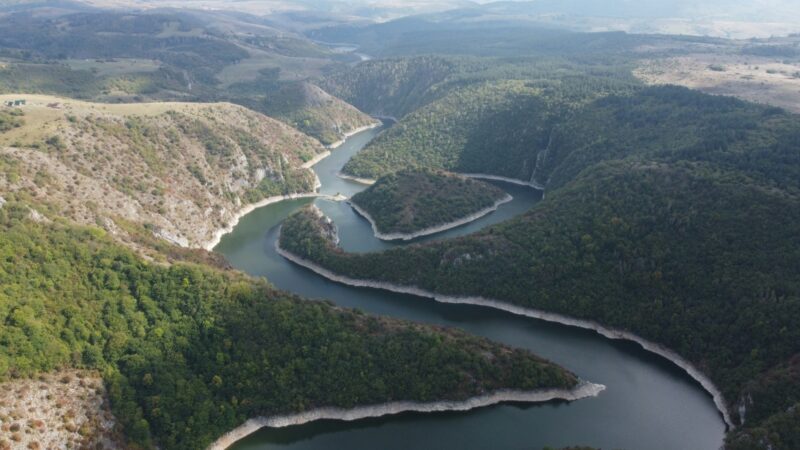
Policy options for Albania, Bosnia & Herzegovina and Serbia to navigate CBAM
This set of policy briefs sets out options to assist countries in the Western Balkans in decarbonising key industries affected by the EU's Carbon Border Adjustment Mechanism (CBAM).
Publications
Submission on the Australian government's review of the Safeguard Mechanism
In Climate Analytics Australia's submission to the Australian government review of the Safeguard Mechanism we argue that the government needs to set up a proper Emissions Trading Regime for industrial emissions, rather than the current situation of allowing unlimited offsets.
Publications

A fossil fuel free Australia
We have modelled a fossil fuel phase-out for Australia that looks at the country's energy system identifying what the government needs to do to get emissions onto a net zero, 1.5˚C aligned pathway.
Publications

Cutting methane, limiting overshoot: pathways for Paris alignment
This report assesses the scale of methane reductions required this decade and beyond to align with the temperature limit of the Paris Agreement.
Publications

Climate-induced loss and damage in Nepal: attribution analysis and institutional readiness for international support
This study assesses climate-induced loss and damage in Nepal through a mixed-methods approach that integrates probabilistic event attribution with mapping and analysis of policy and governance frameworks.

Australia must double down to meet our climate targets. Our new study shows how
CEO Bill Hare on the new fossil free pathway we have modelled for Australia

The detrimental cost of fossil fuel dependence in the Caribbean
Stabilising the Caribbean's energy supply by harnessing its wind, solar, geothermal and wave resources is key to stabilising its economies.

South Asia’s heatwave and ongoing energy crisis
The heatwave that's recently swept South Asia again exposes a deeper structural challenge facing developing economies: how to provide reliable and affordable energy under intensifying climate stress.

Climate leadership from the frontlines: lessons from Bangladesh, Bhutan and Nepal
As Bangladesh, Bhutan, and Nepal graduate from Least Developed Country (LDC) status, their shared climate leadership and regional resilience efforts highlight the need for stronger global support for these countries’ climate ambitions.


Projects